
Four Years of Service for District 3: Student Achievement, Transparency, and Fiscal Responsibility
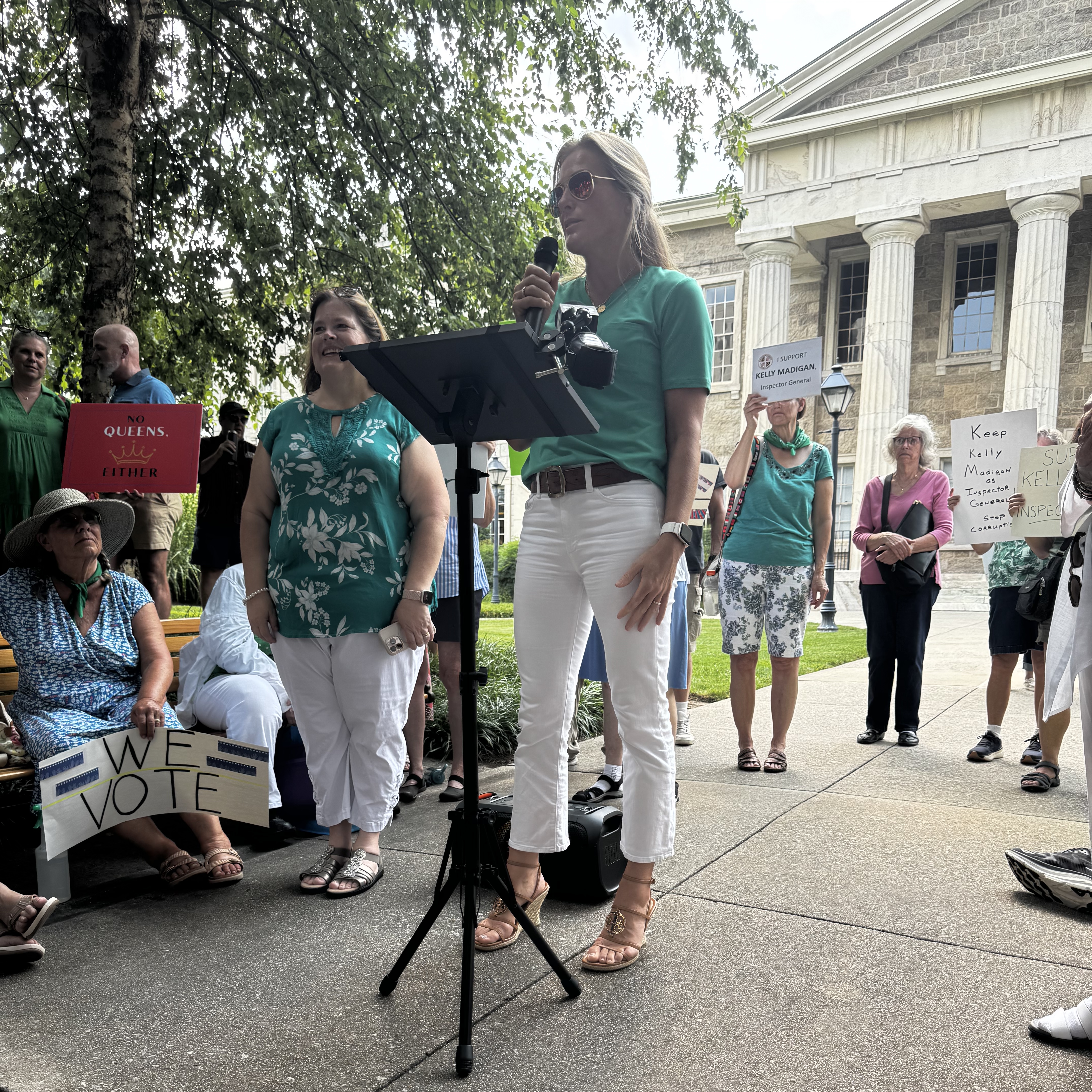
Four Years of Service for District 3
Since assuming office in 2022, I have served as the elected representative for Baltimore County Board of Education District 3, concentrating on student achievement, transparency, and fiscal responsibility. In the following summaries, I have detailed every recorded meeting from the first on December 6, 2022, to the latest on August 19, 2026. These accounts include both in-person and virtual Board meetings, work sessions, special meetings, public hearings, and committee meetings.

A Record of Consistent Participation
My record reflects consistent involvement throughout my initial term as a member of the Baltimore County Board of Education. It encompasses regular Board meetings and work sessions, as well as meetings of the Budget and Finance Committee, Curriculum Committee, Legislative and Governmental Relations Committee, and Audit Committee. Additionally, it includes public hearings and special meetings. The record also emphasizes meetings focused on policy, contracts, curriculum, school boundaries, transportation, student safety, personnel, financial controls, audits, superintendent selection, and annual operating budgets.
My record goes beyond mere attendance. It demonstrates my consistent efforts in asking questions, requesting supporting information, introducing agenda topics, making motions, seconding motions, voting on significant proposals, and seeking extra time for thorough Board review.

Transparency and Public Participation
On the first day, I proposed including a review of the Public Comment and Attendance Guidelines and Procedures in a future agenda to promote in-person public participation; the motion was approved.
Requested time for Board members to ask questions after the Superintendent’s Report and later supported formalizing that opportunity.
Supported making the Sparrows Point Middle and High School feasibility-study executive summary available to the public.
Requested that budget-related matters be presented as discussion agenda items rather than merely information items.
Supported adding the Annual Comprehensive Financial Report to a Board agenda so members could receive the auditor’s management letter and ask follow-up questions.
Supported county Inspector General oversight of the school budget in cases involving waste, fraud, or abuse.
Requested an interactive budget-data dashboard and supported efforts to improve public access to understandable budget information.

Student Achievement and Instructional Quality
Moved to add the Fall 2022 MAP Data Report to the Board agenda, ensuring student performance data was available for discussion.
Requested presentations and follow-up on AMIRA, HMH Into Reading, math sequencing, elementary computer science, secondary English language arts, and state mathematics policy.
Asked for evidence supporting instructional and professional-development contracts, and opposed contracts when the available evidence did not demonstrate credible academic benefit.
Opposed moving forward with the secondary ELA curriculum contract, the Illustrative Math contract, the Mathematics Grade 6 through Algebra 2 contract, and the Tier 2 MSS Reading Intervention Program when I believed additional scrutiny was necessary.
Supported restoring secondary library/media specialists to full-time positions without classroom or advisory assignments.
Supported reallocating up to $3.6 million from the fund balance to maintain secondary library/media specialists without additional staffing cuts or reduced compensation.
Proposed a comprehensive student screen-time policy addressing instructional versus non-instructional use, age-appropriate limits, accessibility, IEP and 504 considerations, teacher discretion, parent communication, monitoring, enforcement, and implementation. The motion was unanimously approved.
Requested information on paraeducator and adult-assistant placement ratios, student safety, bus-route changes, student behavior, cell-phone implementation, and the impact of revised grading rules.
Curriculum Contracts and Contract Oversight
I participated in numerous Curriculum Committee meetings to assess, discuss, and vote on curriculum contracts. Records show that over 50 contracts were reviewed or approved during my first three years on the committee, with several more extending into 2025 and 2026. Furthermore, I was involved in discussions about HMH Into Reading, elementary and secondary ELA, math programs, Illustrative Math, Earth Science textbooks, phonics-based interventions, and other educational resources.
It's crucial to mention that I did not consider contract approval to be automatic. In January 2023, I took steps to remove the school bus electrification contract from the agenda until the entire Board had received more information and had the chance to question and discuss it. Additionally, I opposed instructional contracts when I felt that the evidence, cost, or implementation details were inadequate to justify approval.
Budget Leadership and Fiscal Responsibility
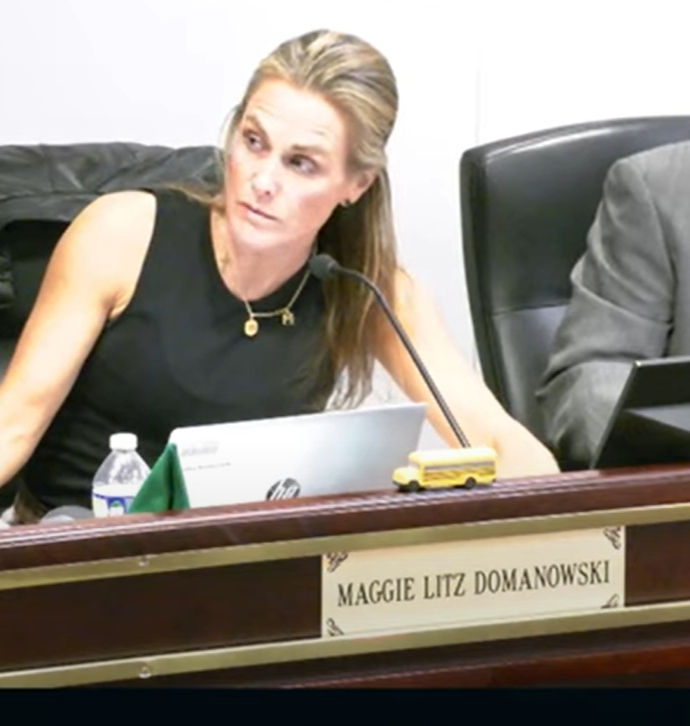
As Chair of the Budget Committee, I devoted extensive time to the FY's 2024, 2025, 2026, and 2027 budget cycles. The committee reviewed Budget Appropriation Transfers, Budget Line Transfers, curriculum-contract spending, Blueprint funding, ESSER projections, special education and ESOL funding, school-based allocations, fixed charges, contract spending authority, budget transparency, internal controls, and the adopted budget.
My questions were designed to connect spending decisions to student outcomes and to make the budget understandable to the Board and the public. I requested detailed breakdowns of professional and support-staff salaries, department-level FTEs, contract services, grant-funded positions, technology costs, special-revenue funding, administration salaries, maintenance costs, and the use of one-time funds.
Questioned the difference between contract spending authority and actual funded budget dollars.
Examined long-term literacy contracts, including actual expenditures, remaining spending authority, whether purchases continued, and whether contracts should be terminated when materials were no longer supported by evidence.
Requested a department-by-department breakdown of professional and support-staff salaries across general-fund and special-revenue budgets.
Asked how special education and ESOL funding aligned with program spending and student needs.
Reviewed the approximately $1 million savings associated with changing Pre-K through Grade 2 device allocations from one-to-one devices to classroom-based devices.
Asked about the cost and infrastructure implications of computer labs compared with student-issued devices.
Questioned major fixed-charge variances in employee benefits, payroll, risk management, and school-based budgets.
Requested clarification regarding salary and wage amounts that appeared inconsistent with listed FTE counts, including contractual employees, substitutes, stipends, overtime, extended-day work, and other non-FTE expenses.
Requested greater budget detail comparable to information published by other Maryland school systems.
Major Budget Votes and Actions
Supported funding 24 athletic trainers, one supervisor, and related equipment and supplies totaling approximately $3.249 million.
Supported restoring 10 central-office resource-teacher positions at an estimated cost of $1.36 million in advanced academics, English language arts, mathematics, and social studies.
Supported restoring reductions in per-pupil allocations through offsets to non-school expenditures.
Supported increasing special-revenue funding by approximately $9.94 million to reconcile with federal appropriations.
Supported increasing the vacancy-turnover rate to identify approximately $28.112 million for restoring classroom teaching positions.
Supported preserving current K–12 instructional staffing ratios and requesting supplemental county funding for any remaining gap.
Opposed the Superintendent’s proposed FY2025, FY2026, and FY2027 budgets when I believed the process lacked sufficient transparency, Board input, zero-based analysis, or protection against increased class sizes.
Moved to postpone adoption of the proposed FY2027 budget until the Board could review the county auditor’s recommendations and their effects.
Supported extending Board member discussion time so members could ask informed questions about the budget.

Budget Committee Governance and Accountability
I worked to strengthen the Budget Committee itself. I helped establish committee goals, schedules, a Purpose and Measures of Effectiveness document, and an update template. I supported creating a subcommittee to develop requirements and costs for an interactive budget dashboard. I opposed dissolving the Budget Committee and opposed a revised Board Handbook that excluded it. I later supported reinstating the Budget Committee and requiring it to revisit its purpose and measures of effectiveness.
I also supported additional review of the Office of Internal Audit, audit workplans, contracts, procurement cards, mileage reimbursement, third-party billing, school activity funds, ERP data and security, and the conduct of investigations. In April 2026, I moved to approve the FY2027 Office of Internal Audit Workplan, and the motion passed.

Boundaries, School Operations, and Community Concerns
Requested long-term redistricting and overcrowding studies, including a focus on Hampton Elementary.
Requested review of Board Policy 1280 to include feeder schools in the boundary process.
Supported postponing a Policy 1280 vote so the corresponding Superintendent’s Rule could be provided and reviewed.
Supported approval of the Central and Northeast Area Middle School Boundary as presented while continuing to request broader boundary-policy review.
Opposed closure actions affecting Campfield Early Learning Center, including the accelerated June 2025 timeline.
Opposed a school calendar that began before Labor Day and included numerous half days.
Opposed a virtual inclement-weather plan that did not clearly establish equivalency between virtual and in-person instruction.
Requested information about charitable organizations supporting students and updates regarding community schools and plans for expansion.

Professional Governance and Open Debate
I supported opportunities for direct questioning, additional information, and open debate on matters affecting students and taxpayers. In March 2025, I opposed a Board censure related to the tone and manner of questions asked during budget discussions. Following the appeals process, the Maryland State Board of Education reversed the censure on August 27, 2025, finding that penalizing the questioning would impede open and relevant discussion and constituted an egregious abuse of discretion.
A Continuing Commitment
Over the past four years, my track record demonstrates a steadfast commitment to supporting decisions that enhance student achievement, demanding transparency before major actions are approved, and carefully examining expenditures to ensure responsible use of public funds. I have backed investments in teaching, staffing, student services, school safety, libraries, multilingual learners, and academic support. I have opposed or sought to postpone proposals when the evidence, public information, financial analysis, or impact on students was not adequately clear.
This reflects just the first four years of my tenure. I am committed to continually asking tough questions, gathering thorough information, ensuring substantial public participation, and making Board decisions that optimally serve the students and families of Baltimore County.


Comments